Volcanoes National Park.

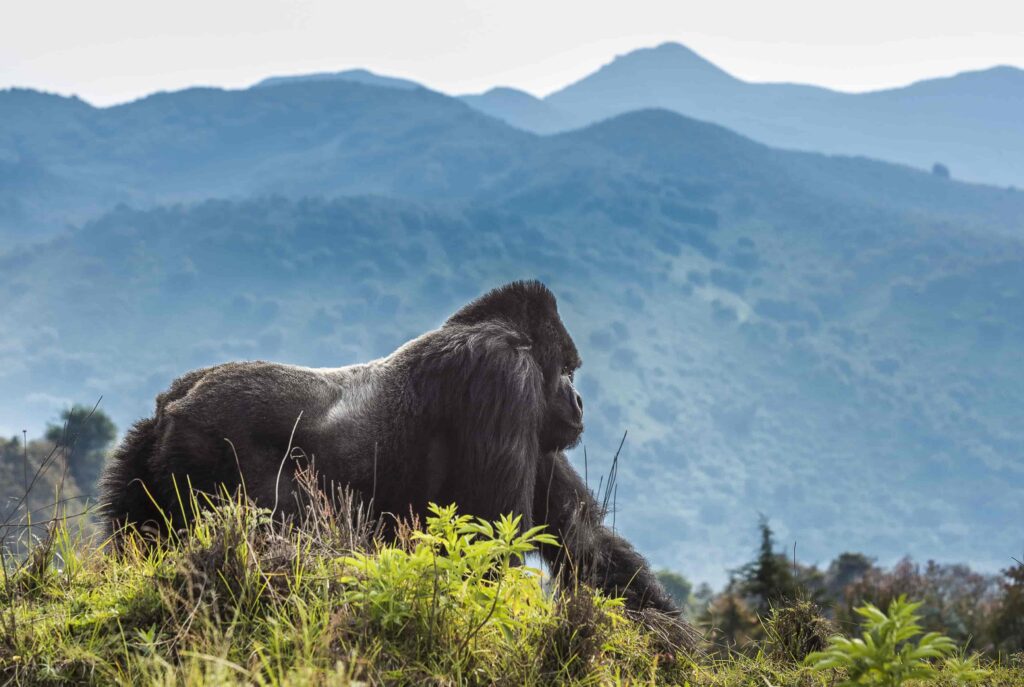
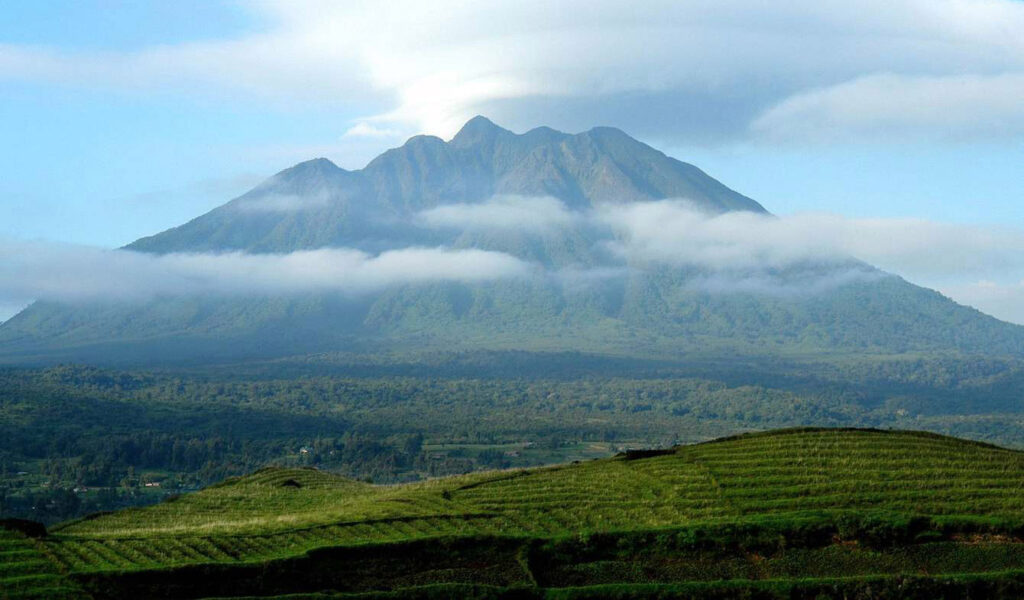
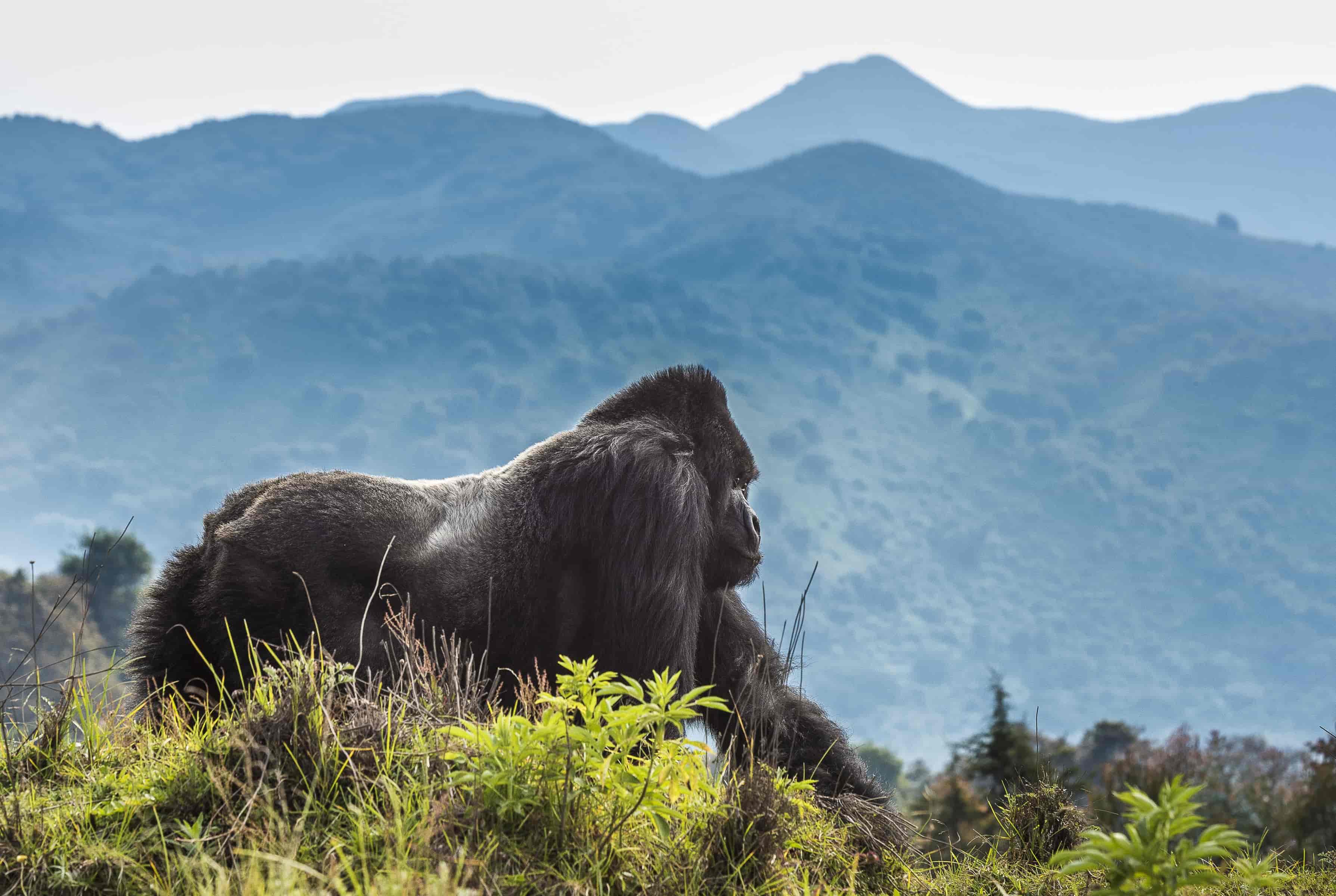
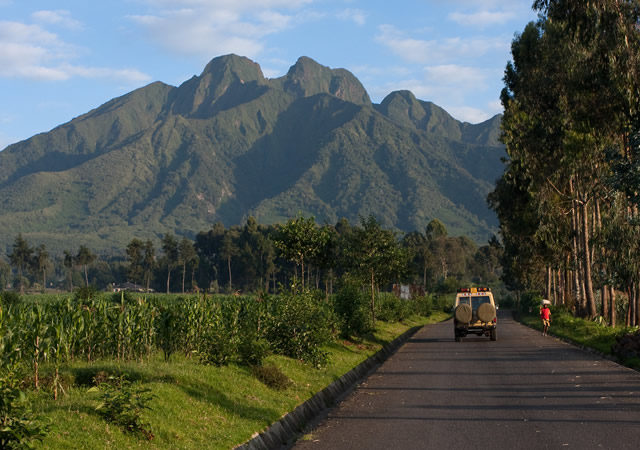
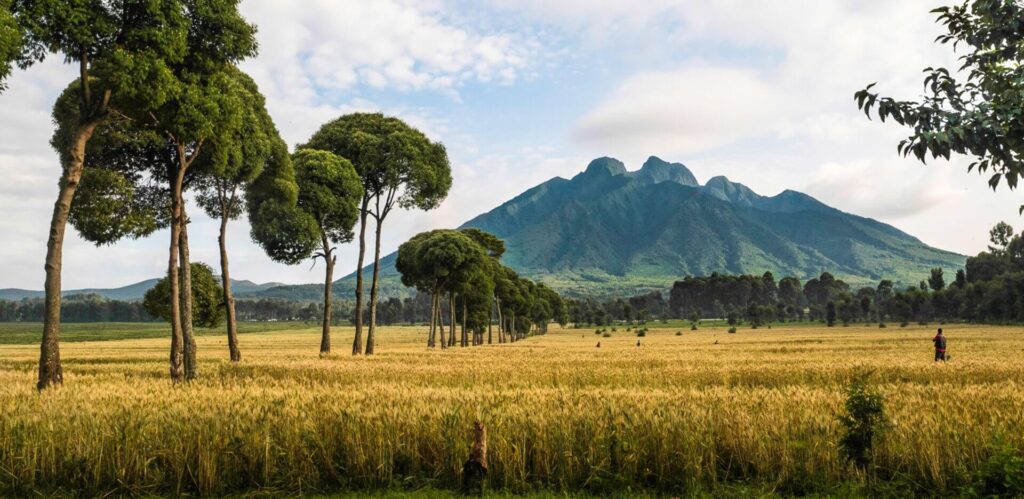
Volcanoes National Park is a captivating, biodiverse conservation area in Rwanda. The park occupies the northwest provinces of Rwanda covering an area of up to 160 square kilometers. It is an outstanding destination due to the breathtaking extinct volcanoes it hosts that add to the overall beauty.
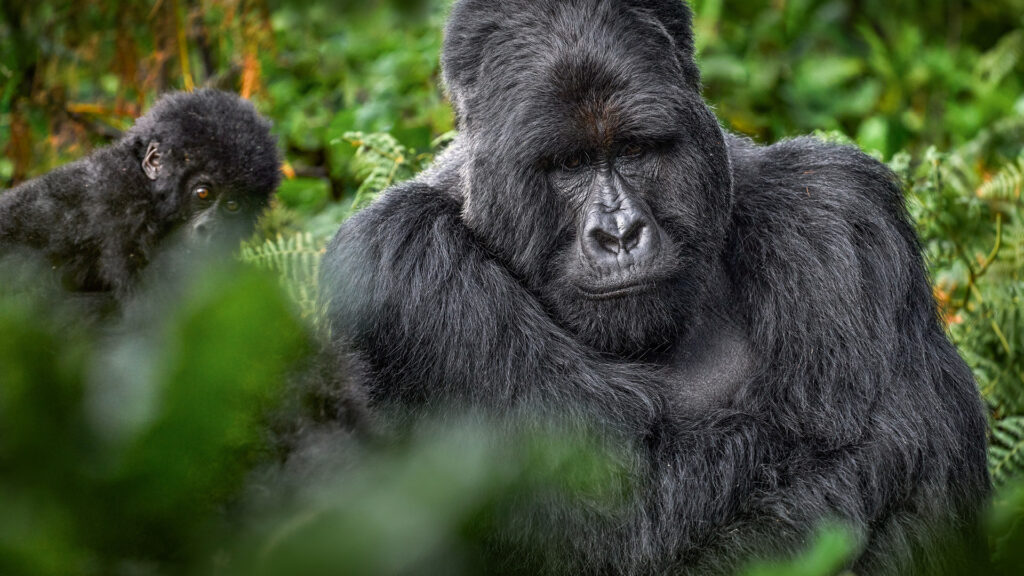
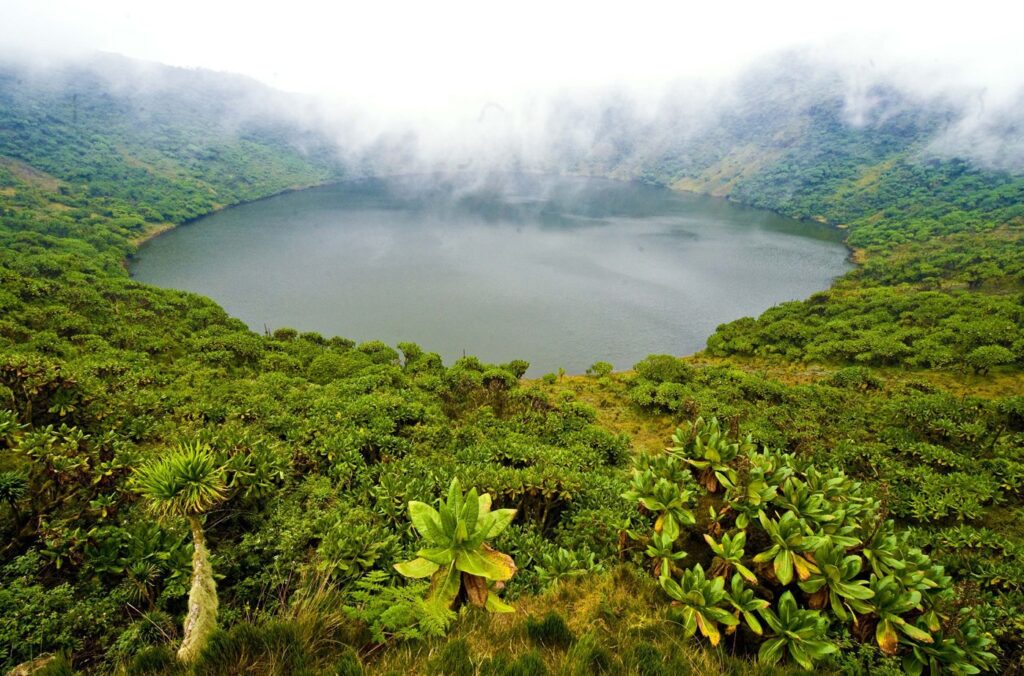
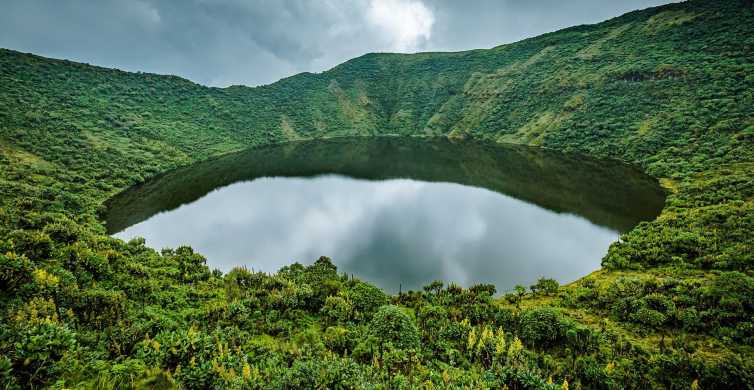
The outstanding volcanic landscapes include five of the eight Virunga mountains, that is to say mount Karisimbi, Bisoke, Mikeno, Nyiragongo, and Sabyinyo. The slopes of these mountains are covered with moist evergreen flora that is a habitat and feeding ground for a variety of animals especially primates, Wildcats, and most notably the mountain gorillas. Volcanoes National Park is a must-visit for adventure-seeking travelers and nature enthusiasts not forgetting those seeking to uncover the awe-inspiring beauty of the heart of Africa.
History of Volcanoes National Park.
The first attempts to conserve the biodiversity of the park resulted in the gazetting of the land as a small reserve in 1925. It was mainly to protect the critically endangered mountain gorillas from poachers who seemed so determined to finish even the little remaining population of them. They were doing this through acts like hunting them down for their next meal, cutting down their habitat in the name of firewood, and establishing settlements. Volcanoes National Park was the first National Park to be created on the African continent and boasts as the pioneer of conservation efforts.
The park was extended further into Rwanda by the Belgians in 1958 though they faced a lot of resistance from locals. In 1967, a renowned researcher Dian Fossey founded the Karisoke Research Center to further study the gorillas which led to the habituation processes and opened the door for gorilla tourism activities in the region. Unfortunately, in 1992, Volcanoes National Park became a disastrous area since it was
turned into a battlefield during the Rwanda civil war. Gorilla tourism was at a standstill until 1999 whenpeace prevailed in the country.

Uniqueness of Volcanoes National Park.
Volcanoes National Park boasts among other national parks in the country as the only National Park where visitors can have a glance at the mountain gorillas. The fact that it was the first National Park to be gazetted on the African continent further sets it apart. Travelers to the park therefore have the
opportunity to get first-hand information on the species that have been conserved for decades.
Activities carried out in Volcanoes National Park.
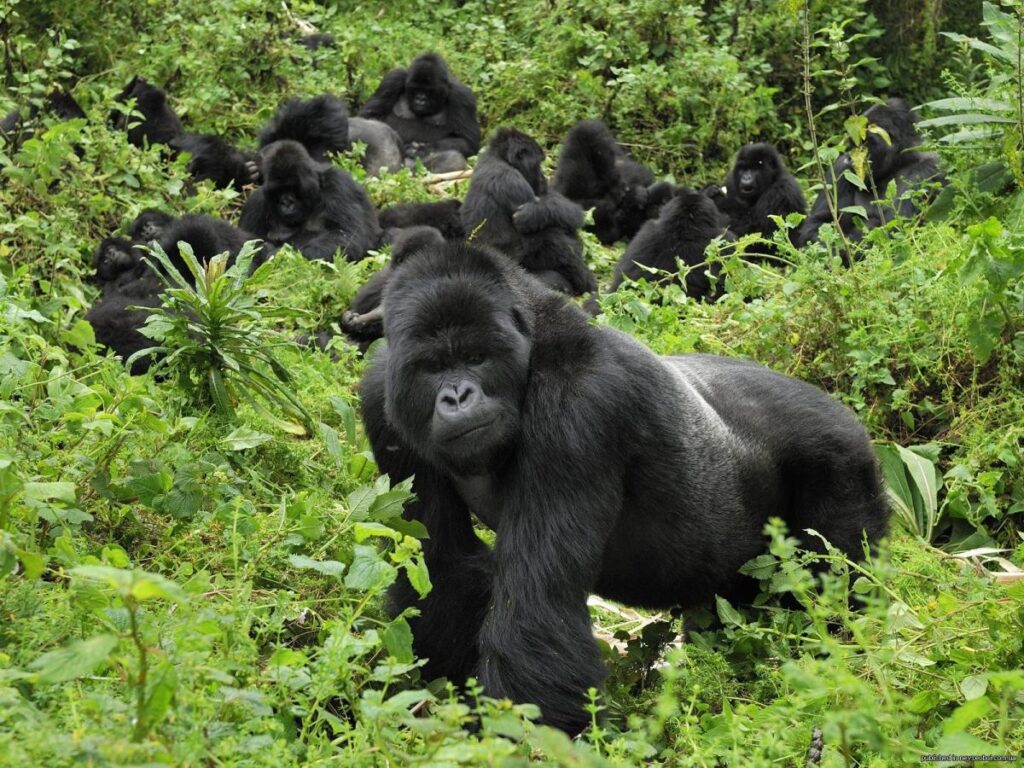
Gorilla trekking and habituation. Volcanoes National Park is home to 13 gorilla families that can be trekked down by visitors. These are fully habituated and therefore free of human presence in their natural habitat. There are other families undergoing habituation processes that the travelers can gladly join.
Mountain gorillas are the highlights of the park since most travelers to the park have the urge to indulge
in gorilla tourism activities. Volcano hiking. This is yet another exciting touristic activity travelers can indulge in when in Volcanoes National Park. Visitors choose one of the five volcanoes to climb and enjoy the hiking experience. Research. Visitors interested in research about the biodiversity of the African continent flock to Volcanoes National Park since it is a hidden gem of concentration of a series of them. Guests can research the primates of the park especially the black and white colobus monkeys, golden monkeys, vervet monkeys, red-tailed monkeys, and the rest.

How to access Volcanoes National Park.
Volcanoes National Park is a two to three hours’ drive away from Kigali International Airport. Visitors drivethrough the towns of Rubavu and Musanze to access the park. Also, you Favorable times to visit. The dry seasons of the year are the most appropriate travel times to visit Volcanoes National Park. They are characterized by dry weather which aids uninterrupted hiking through the mountainous terrain and the thick rainforests. The dry seasons take place every year from early June to early October and from early December to late February: It is however important to remember that the park is always open all year round for visitors and therefore they can embark on exploration activities even in the wet seasons. The wet seasons also offer awesome experiences especially for the primate trekking since they do not move long distances due to the abundance of food in the forest.
Volcano climbing in volcanoes National Park


Visitors with the desire to undertake volcano climbing in Mgahinga National Park can opt to fly to the park from Entebbe International Airport or Kajjansi Airfield to Kisoro airstrip in the South from where they can be picked by a professional tourist guide to make their way to the park.

 Visitors can also drive from Kampala to the park through the Kampala – Mbarara – Kisoro road Which takes about 10 to 11 hours.

What to carry when going for volcano climbing.

Visitors embarking on the exciting volcanic climbing activity are advised to take their comfort on the hike as a necessity.

They are advised to dress appropriately in comfortable clothing. Travelers should endeavor to always carry a hat with them to protect them from the scorching sun’s rays, hiking boots to enable them to maneuver through the thick mountainous terrain with no hardships, and shirts, shorts, trousers, and sunglasses are equally important.

 A camera to help that traveler capture the exciting life moments.

A tourist day chaser bag is equally important when embarking on this climb. It helps carry personal necessities, especially drinking water, snacks, personal medicine, and other equipment.

Volcano climbing in Mgahinga National Park

Volcanic climbing in Mgahinga National Park is an exciting endeavor most adventure-seeking travelers to Uganda indulge in when in the South. The activity unveils the breathtaking views of the entire magnificent Virunga conservation area. The Virunga massif is comprised of eight stunning volcanoes that are covered with large vegetation which tourists enjoy marveling at.

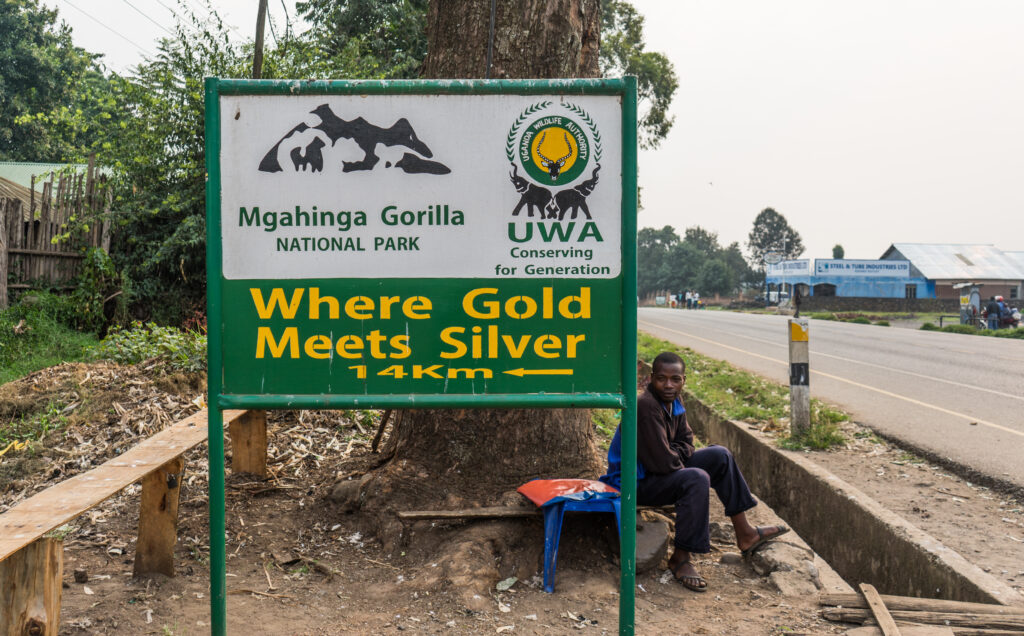
 Mgahinga National Park alone spans three volcanoes that is to say Mount Muhabura, Sabyinyo, and Gahinga. The climbing experience of the volcanoes is surely out of this world and always leaves visitors extremely exhilarated.

Mgahinga National Park as the host of Volcano climbing.

Mgahinga National Park lies in the southwest of Uganda in the Kisoro district. It covers an area of about 33.7 square kilometers comprising 3 volcanoes of the 8 that make Virunga Ranges (Muhabura the highest that stands at  4127m ASL, Sabyinyo with 3 peaks and shared amongst Uganda, Rwanda and DRC, this stands at 3669m, Gahinga which is the shortest of the three standing at 3474m). Mgahinga boasts of its sensational biodiversity especially the evergreen tropical rainforests on its mountain slopes that host several animals and rare plant species.

The animals endemic to Mgahinga include the primates, especially the golden monkeys, blue monkeys, lhoests, Black and white colobus monkeys, red-tailed monkeys, and the most notable mountain gorillas. These can be watched as travelers undertake their volcano climbing endeavors since they are part of the hidden treasures to be uncovered whilst climbing.

The volcano climbing experience in Mgahinga National Park.

The volcano climbing adventure allows explorers to climb up one of the three volcanoes of the park. The visitor selects from Mount Gahinga, Muhabura, and Sabyinyo. The volcano climbing activity starts with choosing what mountain to climb, visitors then go ahead and book the slot with the authorities through a registered operator for $80 for the foreign non-residents, $70.00 for the foreign residents, and Uganda shillings 50,000 for the East African citizens.

All these fees include park entrance, porters who help support the guests at times when they are helpless along the hike, cooks, guides, and the excluded tent for some rest after a long climb.

The attempts start in the morning with a briefing with the Park Rangers who help tell the travelers about the dos and don’ts when on the climb. The climb usually takes 6 to 8 hours depending on the physical fitness of the travelers and the climbing speed.

 The hike to the summit takes guests through various large vegetation zones especially bamboo forests where you get the opportunity to see several wildlife species. While at the summit, you are graced with the breathtaking views of the crater lakes beneath and the sub-Alpine plants alongside clear views of other volcanoes. This is not only a physically challenging moment but also an opportunity for sightseeing and photography.

Best time to climb Volcanoes in Mgahinga.

Volcanoes in Mgahinga can be climbed at any time of the year since the park is usually open all year round. The dry months of the year, however, come off as the best seasons since they are characterized by steady grounds to help the visitors climb up the summit with limited hindrances. The dry months refer to the periods from May to early September and December to February.

How to get there.

Visitors with the desire to undertake volcano climbing in Mgahinga National Park can opt to fly to the park from Entebbe International Airport or Kajjansi Airfield to Kisoro airstrip in the South from where they can be picked by a professional tourist guide to make their way to the park.

 Visitors can also drive from Kampala to the park through the Kampala – Mbarara – Kisoro road Which takes about 10 to 11 hours.

What to carry when going for volcano climbing.

Visitors embarking on the exciting volcanic climbing activity are advised to take their comfort on the hike as a necessity.

They are advised to dress appropriately in comfortable clothing. Travelers should endeavor to always carry a hat with them to protect them from the scorching sun’s rays, hiking boots to enable them to maneuver through the thick mountainous terrain with no hardships, and shirts, shorts, trousers, and sunglasses are equally important.

 A camera to help that traveler capture the exciting life moments.

A tourist day chaser bag is equally important when embarking on this climb. It helps carry personal necessities, especially drinking water, snacks, personal medicine, and other equipment.

Nyungwe Forest Primates.

Nyungwe National Park is one of the largest national parks in Rwanda celebrated for its exceptional contribution in boosting Rwanda’s tourism industry. Nyungwe is characterized by a thick tropical rainforest harboring several attractive species of flora and fauna.

The National Park is located in the southwest of Rwanda as you approach Rwanda’s border with Burundi in the Rusizi district. Nyungwe occupies an area of approximately 1019 square kilometers which is characterized by a thick forest cover and diverse landscapes. It is such factors that make it a favorable habitat to 13 known primates. 

Nyungwe forest primates.

The primates in the National Park include;

Chimpanzees.

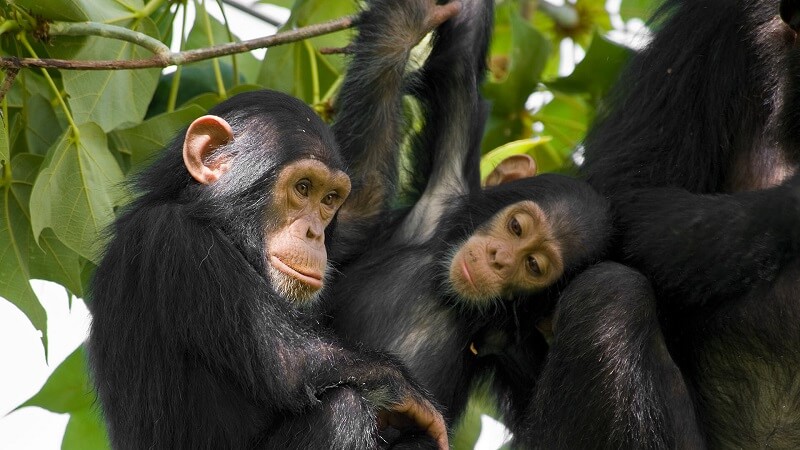
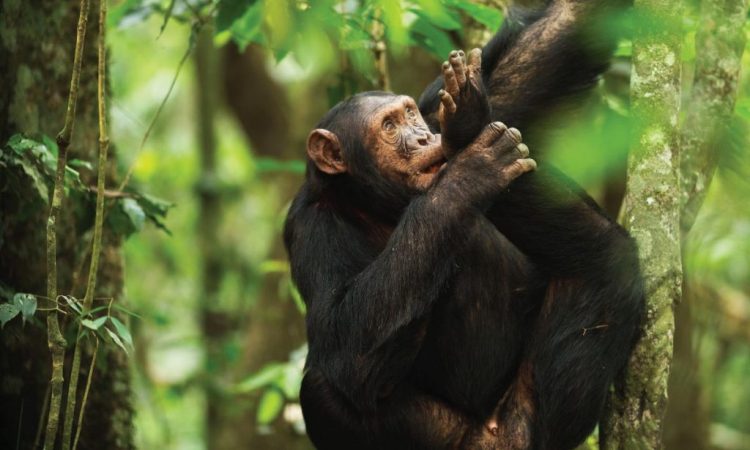
Chimpanzees are a species of great ape. They are endemic to the forests and savannah grasslands of tropical Africa. Chimpanzees can be found in Nyungwe Forest National Park too since it is part of the tropical regions on the African continent.

Chimpanzees are closely related to human beings; this is evident in the fact that they share 98.4% of the human DNA. Chimpanzees live in isolated groups of 15 to 150 individuals. Several habituated families in the forest can be trekked down by visitors all through the year.

Blue monkeys.

Also known as the diademed monkeys, the blue monkeys are a species of the old-world monkey. They are native to central and East African tropical rainforests. Blue monkeys reside in the Congo basins and East African Rift Valley areas. The blue monkeys are called so because of their crown which is blackish blue including the feet, front legs, and the arms. The blue monkeys too can be observed in Nyungwe forest.
L’hoests monkeys.

The l’hoest Monkeys are also known as the mountain monkeys. They are endemic to the mountainous regions, which explains why they reside in the Virunga massif. Some of them reside in the Congo basin forests too and in the East African Rift Valley areas. They can be distinguished from other primates by their dark coat and white beard. Nyungwe Forest is blessed to host these awesome creatures too.

Owl-faced monkeys.

The owl-faced monkeys are also known as the Hamlyn monkeys. They are among the old species of the old-world monkey. It is native to the bamboo forest, especially in the Congo basins. They are an absolutely rare breed known from a few specimens. Owl-faced monkeys travel on the ground and it is arguably a nocturnal according to the researchers of IUCN. Hamlyn’s Monkeys can also be found in Nyungwe forest.
Golden monkeys.

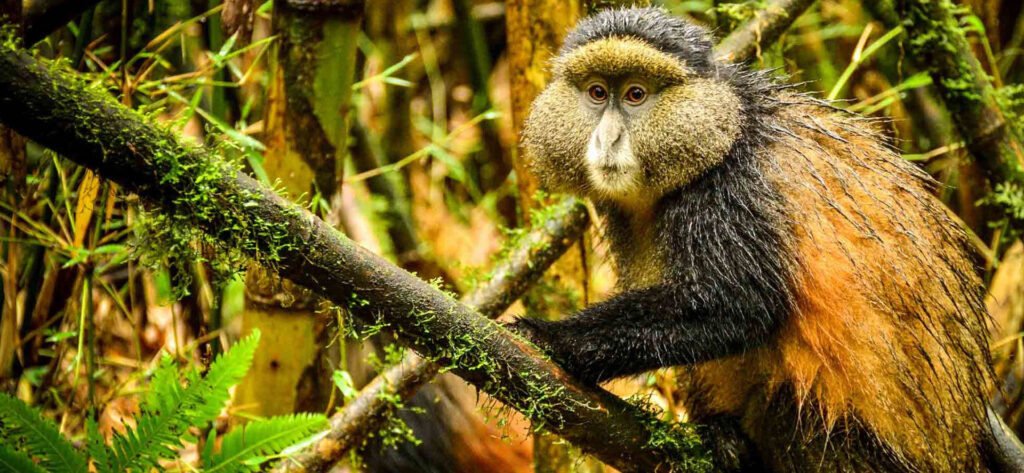
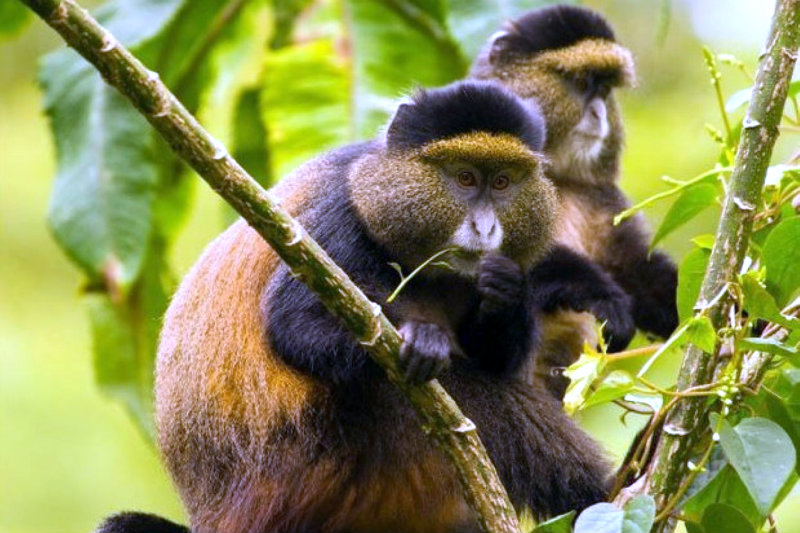
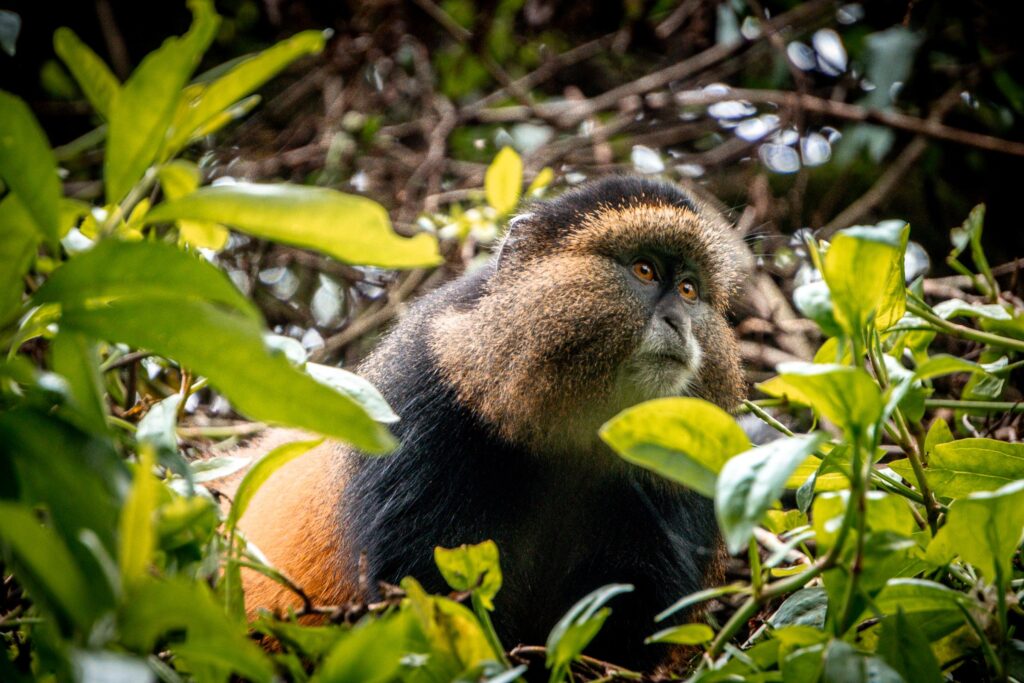
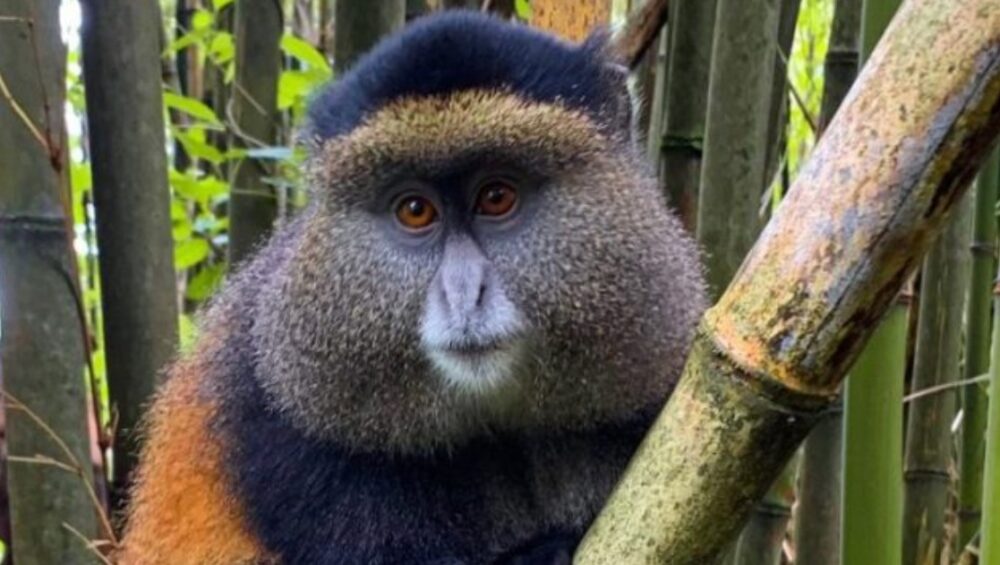
 The golden monkeys are a world-old monkey species endemic to the Virunga volcanic mountains of central Africa. They are a subspecies of the blue monkey. They are endangered according to IUCN reports. The golden monkeys have similarities with the blue monkeys except that they have a golden orange patch on the upper flanks and the back. Golden monkeys live in social groups of up to 30 individuals. They can be trekked in the Nyungwe forest as well.

Red-tailed monkeys.

The red-tailed monkeys are also known as the black cheeked white-nosed monkeys. It belongs to the primate species of the family Cercopithecoidea. They are regarded as of less concern according to IUCN reports of conservation status. Red-tailed monkeys can be found in central African forests and Nyungwe National Park too.

Crowned monkey.

These are medium-sized species of the world’s old monkey. They are also known as the crested Mona monkeys. Golden monkeys prefer lowland and submarine forests, particularly in the upper strata of the trees, the canopies at about 66 to 82 feet above the forest floor. The crowned monkey’s males are larger as compared to the females. their tails are longer than their bodies. Nyungwe National Park also hosts a significant population of these.

Dent’s mona monkey.

The dent’s mona monkey too is an old-world monkey in the family Cercopithecoidea. It is endemic to the Democratic Republic of Congo, Rwanda, and the Central African Republic. In Rwanda, it can be found in the Nyungwe forest. The dent’s Mona monkey was recently classified as a subspecies of the wolf’s Mona monkey.
Vervet monkeys.

The vervet monkeys also belong to the Old World’s monkey and are native to the African tropical forests and savanna grasslands. They are distinguished majorly by their bluish genitals. They can also be identified depending on the yellow to greenish-brown coat of hair they possess. They have white bellies with white fur too on their brows and cheeks.

Olive baboons.

These are also known as Anubis baboons. They too are an old-world monkey species. They are arguably the most wide-ranging of all baboon species. The olive baboons are endemic to over 25 countries all over Africa, Rwanda inclusive. Olive baboons can be encountered in the Nyungwe forest too on a good day.

Grey-cheeked mangabeys.

The grey-cheeked mangabeys are also known as the white-cheeked mangabeys. They are endemic to central African riverine forests. They range from Cameroon to Gabon however a significant population of them can be seen in Nyungwe Forest. The grey-cheeked mangabeys are dark monkeys, small and hairy.
Black and white colobus monkeys.

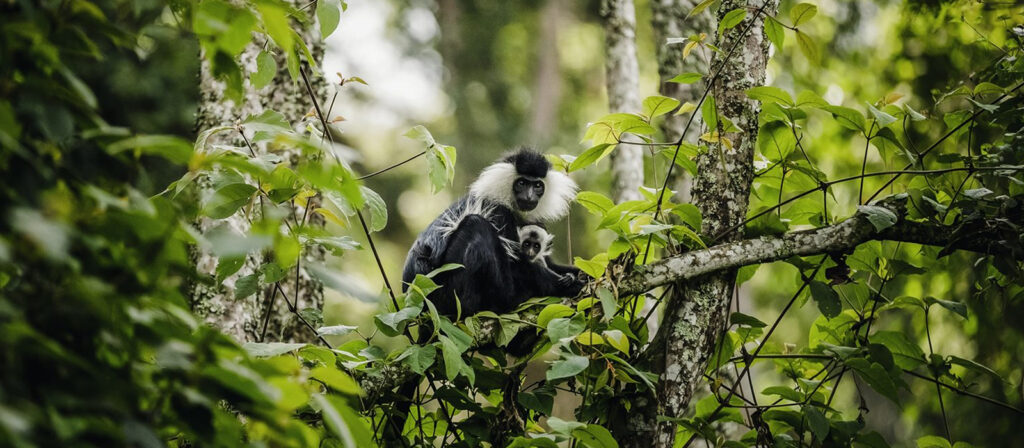
The black and white colobus monkeys are closely related to the red colobus monkeys. There are 5 species of this monkey and up to 8 subspecies. The black and white colobus monkeys are endemic to the Afro-montane forests and riverine forests in East Africa. Black and white colobus monkeys can be found in Nyungwe forests too in Rwanda.

More about Uganda

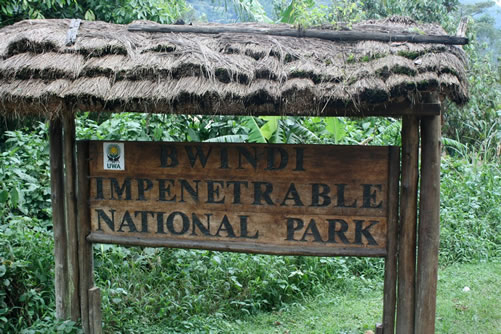
For its modest size, Uganda packs a punch as a travel destination. Most choose a trip to Uganda to come face-to-face with its most mysterious and famous inhabitants: the mountain gorillas of Bwindi impenetrable National apark home to half of the remaining mountain Gorilla population in the world, but as the home of the much-contested source of the Nile and the tallest mountain range in Africa, the Rwenzori, there’s much to be discovered in Uganda. It’s also a top destination for tracking chimpanzees in Kibale forest National park known as primate capital of the world home to over 13 species of primates as well as a good choice for an African safari to see the Big Five. Winston Churchill referred to Uganda as the ‘Pearl of Africa’ and it’s easy to see why.

Stunning landscapes, wandering wildlife and welcoming locals make Uganda a destination not to be overlooked. As tourism is less well-established here you’ll be able to experience a slice of ‘true Africa’ on a trip to Uganda. Aside from the urban sprawl of the capital, Kampala, on the banks of Lake Victoria, Uganda is largely undeveloped. On a tour of Uganda, you’ll pass by picture-perfect terraced hillsides and dense forests as you explore the wild side of Africa. Situated between Kenya, South Sudan, the Democratic Republic of Congo, Rwanda and Tanzania, don’t miss out on visiting Uganda when you travel to East Africa.

History of Uganda

Understanding the history of Uganda is the best way to get to know the heart of the country and how it came to be the fascinating travel destination it is today. Hunter-gatherer communities and tribal groups were the original inhabitants of Uganda. In the 14th-15th centuries, the Empire of Kitara emerged as the first organized state in present-day Uganda, followed by the kingdoms of Bunyoro-Kitara, Buganda, Toro, Ankole and Busoga. In the 19th-century British explorers arrived in the kingdoms, on their search for the source of the Nile, marking the beginning of the Imperial British East African Company and eventually the Uganda Protectorate.

Uganda gained independence from Britain in 1962, leading to the abolition of the countries traditional kingdoms as it became a republic. In 1971, a military coup led by Idi Amin spelt the beginning of eight dark years in Uganda’s history. More than 100,000 Ugandans were murdered under the regime, in particular, those who had supported the former president. Furthermore, the large Asian population, many of which were entrepreneurs and business owners, were forcibly expelled during this era and properties confiscated from their then owners and Idi Amin gave most of the properties to his close friends.

Such a huge loss of the population caused a decline in infrastructure and put a strain on the economy. In 1978 Amin’s forces invaded neighbouring Tanzania, sparking the Uganda-Tanzania War, which Uganda eventually lost when Kampala was captured the following year. Amin then fled the country. In 1986 political stability was restored under YoweriMuseveni, who remains the president to this day.


Nature in Uganda

Lying in the East African Plateau, Uganda is known for its fantastic natural attractions, such as Lake Victoria, one of the world’s largest lakes and an integral part of daily life for southern Ugandans. Above all else, a trip to Uganda is all about embracing the amazing natural environment and all the amazing sights and sounds that come with it. Murchinson Falls is one of the country’s top natural attractions. This national park is famous for its waterfall, where the Victoria Nile plunges over a massive drop in a spectacular display of the power of nature. River kayaking is a popular activity in the park, as well as day trips on the Nile river itself. Murchinson Falls is also home to a variety of wildlife, such as elephants, hippos and even lions. Bwindi Impenetrable National Park is, without a doubt, Uganda’s most desirable destination.

It’s one of the best places in the world to see mountain gorillas in the wild. A number of gorilla ‘troops’ can be traced within these mist-shrouded mountains and tracking excursions are well worth the expense as expert guides help to guide travellers into the heart of the forest to watch the gorillas in their natural habitat. Queen Elizabeth National Park is a great choice for those looking for an authentic safari experience. Named after Queen Elizabeth, following her visit to Uganda in 1952, the park is similar to other game parks in East Africa but with a greater concentration of animals, ranging from lions to leopards, chimpanzees, hippos and the iconic Ugandan kob.

If you’re keen to see more of the country’s primate population on a tour of Uganda, you cannot miss out on a visit to Kibale National Park. This reserve is famous for its chimpanzee tracking excursions and is home to the highest concentration of primates in the world with 15 primate species in the park. It also plays host to a rich and diverse population of birdlife, making it a paradise for avid ‘twitchers’. Finally, if you’re the kind of adventurer that’s pulled to the mystery of the mountains, head to Rwenzori National Park which encompasses the Rwenzori mountain range and acts as a natural border between Uganda and the Democratic Republic of Congo. The highest peak is Mount Stanley, which stands at a staggering 5,109 metres tall. 

Culture in Uganda

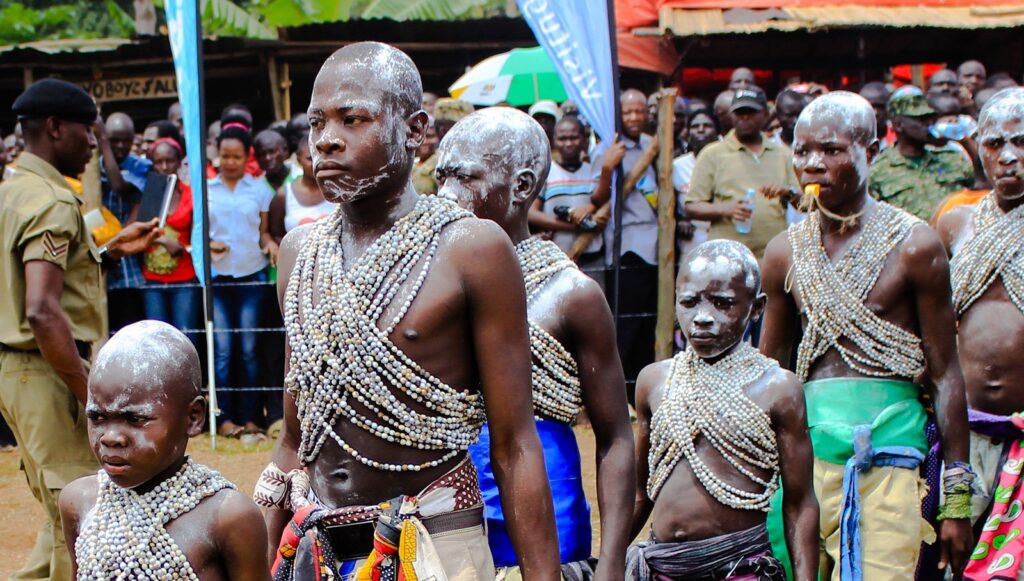
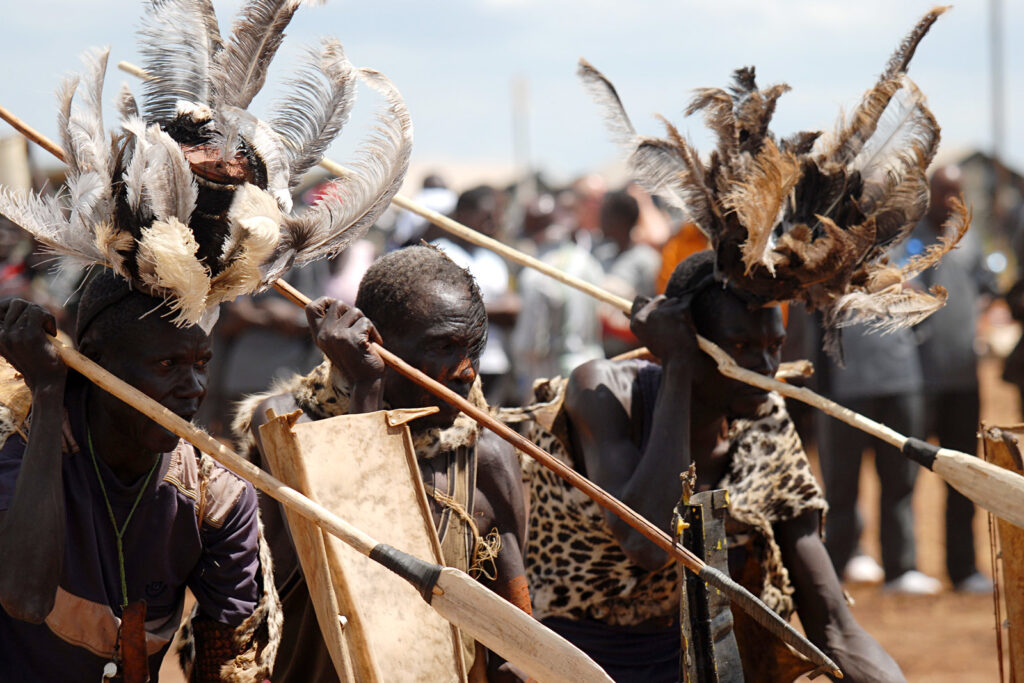
Due to the diverse range of ethnic groups living within Uganda,  the national culture is complex and multi-faced. In the north of the country, you can find groups such as the Lango, Acholi and Karamojong people, the latter of which is known for their livestock herding traditions. Elsewhere in Uganda, Bantu-speaking groups make up a large percentage of the population. The official languages are English and Swahili, although many different Bantu languages are spoken widely throughout the nation. With over 55 tribes, each tribe with their own language which makes Uganda the most culturally diversified country in the World. Christianity is the largest religion and there is also a considerable Muslim population, which can be traced back to connections made through East African trade routes during the 19th-century.

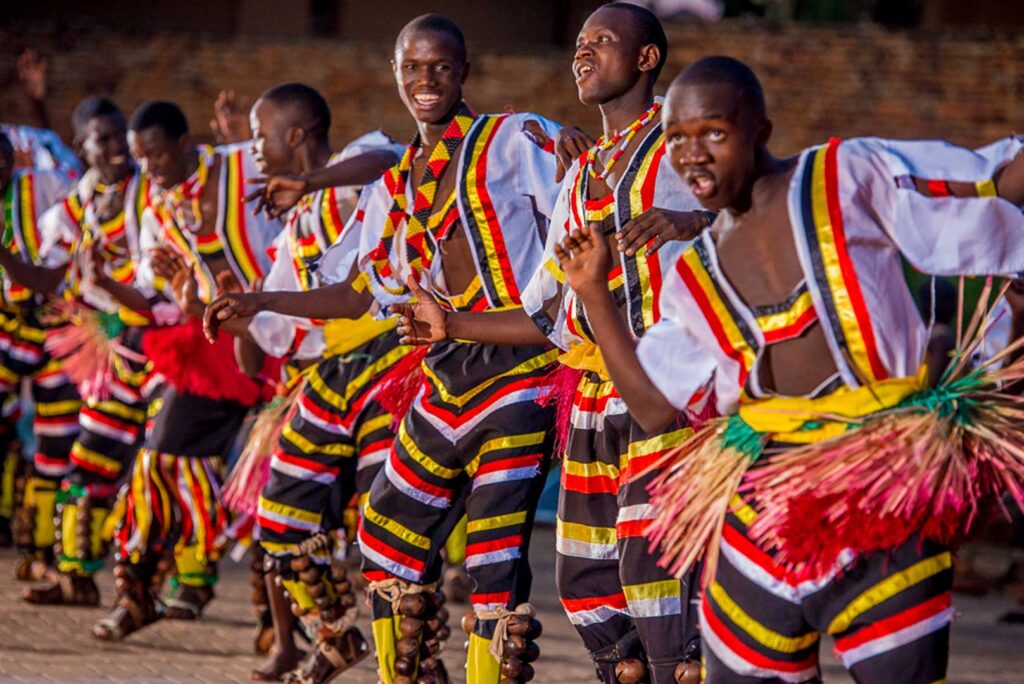
If you travel to Uganda you’ll encounter many opportunities to get to know the diverse local cultures. From witnessing the intricate ceremonial dances of Bwindi’s Batwa people, or getting to know the farming practices of local tribes, to discovering the ancient rock paintings of Nyero Rock and meeting urban Ugandans in a busy Kampala bar. There are many special cultural sites worth visiting on a tour of Uganda.

Visiting the ancient Buganda Tombs of Kasubi, the Basilica of the Uganda Martyrs or the sacred Sezibwa Falls can all reveal complex and fascinating elements of Ugandan culture. Coffee is another important part of Ugandan culture, and they make a stunningly good cup as well as growing the beans. On a trip to Uganda, it is worthwhile remembering that the country is relatively conservative and therefore visitors and locals alike are expected to dress modestly. 

This beautiful country, known for its mountain gorillas, forests and the great Lake Victoria, is a haven for wildlife lovers and a paradise for any traveller who wants to experience unfiltered Africa. Authentic people, lively cities and untouched natural beauty, means a trip to Uganda needs to be top of your travel list

Musanze Caves

In the Northern region of Rwanda alongAlbertine region in the most visited town in Rwanda Musanze is the Musanze Caves which makeup the 52 caves existing in the country. They are a hidden treasure located close to Volcanoes National Park and formed as a result of volcanic movements that occurred over 60 million years ago. Musanze caves were formed by Cenozoic volcanic rocks and composed of lava basaltic strata from eruptions that happened on Mount. Sabyinyo and Bisoke.

The cave is a 2km long tunnel whose large entrance as big as that of a cathedral stretches for 10 kilometers wide, once inside, there are several paths leading to known and unknown destinations. You can feel the cold and get wet while inside, backed with echoes of small droplets of water falling from the caves’rocky ceiling.

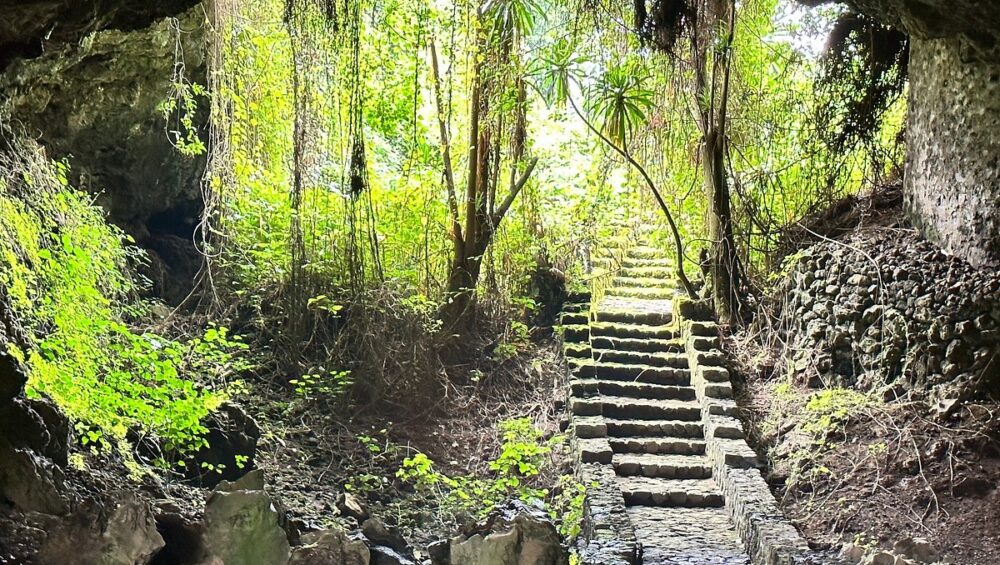
The dark tunnels are filled with thousands of bats that can be seen hanging from the rocky ceilings. There are about 31 more entrances known to access the cave. The caves’ floor has been modified to look like stairs just for easy navigation of visitors.

According to a legend narrated by the locals, it is said that the cave was created by a local king who would occasionallyseek refuge here. The caves were an ancestral site during the prehistoric era which were used bymostRwandan tribes to crown their new leaders. During the 1994 genocide, Musanze caves gained popularity as a hiding place for refugees and also a number of bodies were dumped here therefore considered as a tomb to many locals, only the courageous can explore the grave individually. However, you can be guided through by a local guide and individuals are not allowed to access it.

On the surface of the cave is a circular spot that was left by the volcanic eruption,the volcanic soilshave favored the growth of beautiful flowers and vegetation that welcome visitors at the entrance. While here, you can see the great views of mountains Karisimbi, Gahinga and Muhabura at a wider angle. Musanze caves was launched for visits in 2014, hence one of the most recently added attractions in Rwanda. During its first two months, the cave was able to attract 400 visitors which proved that it was a major tourist attraction and treasure for the country.

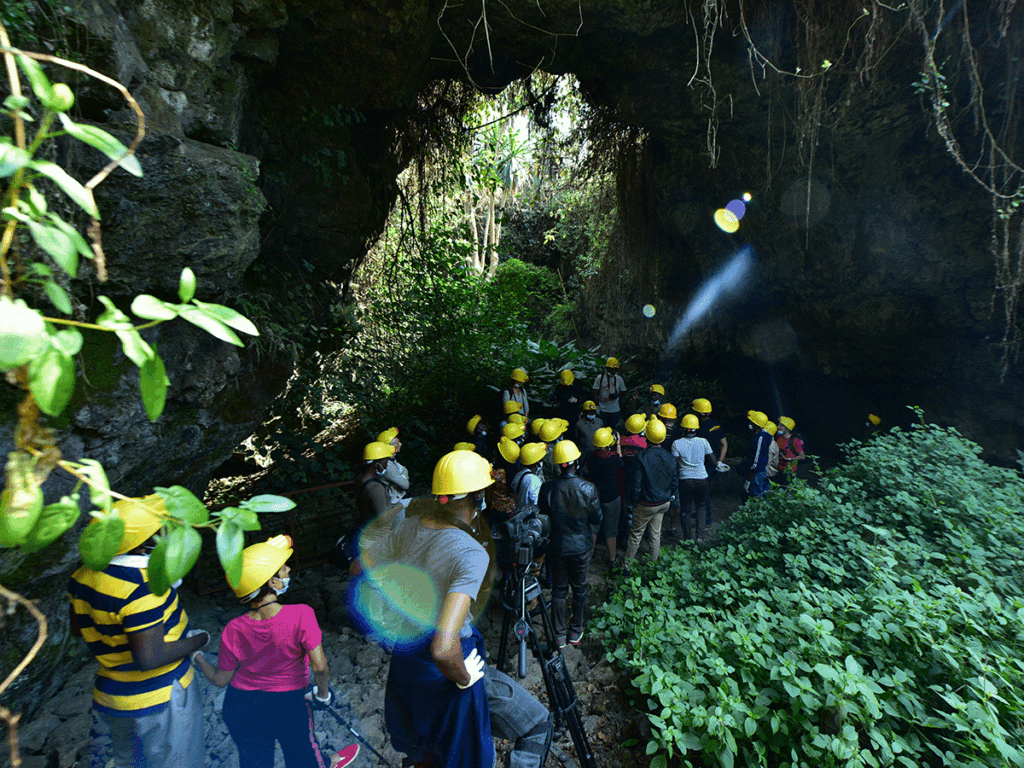
Managed by the Rwanda Development Board, it was able to deploy Rwanda Defense Forces to protect the area as it is prone to being a hiding place for rebels, visitors are advised to carry a torch, helmet, good rubber shoes because the floor is rocky and always wet. The trail takes about 1 hour and in order to visit one needs a permit that goes for only $50 per person.

After visiting the caves, you can visit local communities who stay close to the caves for a culturalexperience, while there you will learn more about their daily activities like the art of making hunting and fishing tools like arrows, baskets made from banana fiber and also how they make their different art pieces from cow dung and soil which you can purchase as souvenirs.

Visit the Buhanga Eco Park which is named after Rwanda’s first ever King. Located in Buhanga forest which consists of another cave. You can camp here and learn about the history and mythical stories connected to this place. The area also has three trees that have grown to form “Inyabutatu” a single tree and this is believed to represent the unity ofthree tribes that became one under the leadership of one king.

Visiting costs Buhanga $40, it is a peaceful and serene place suitable for camping and picnics.

The caves can be accessed on road which is a 3-4 hours’ drive from Kigali city.

Mountain Gorilla experience

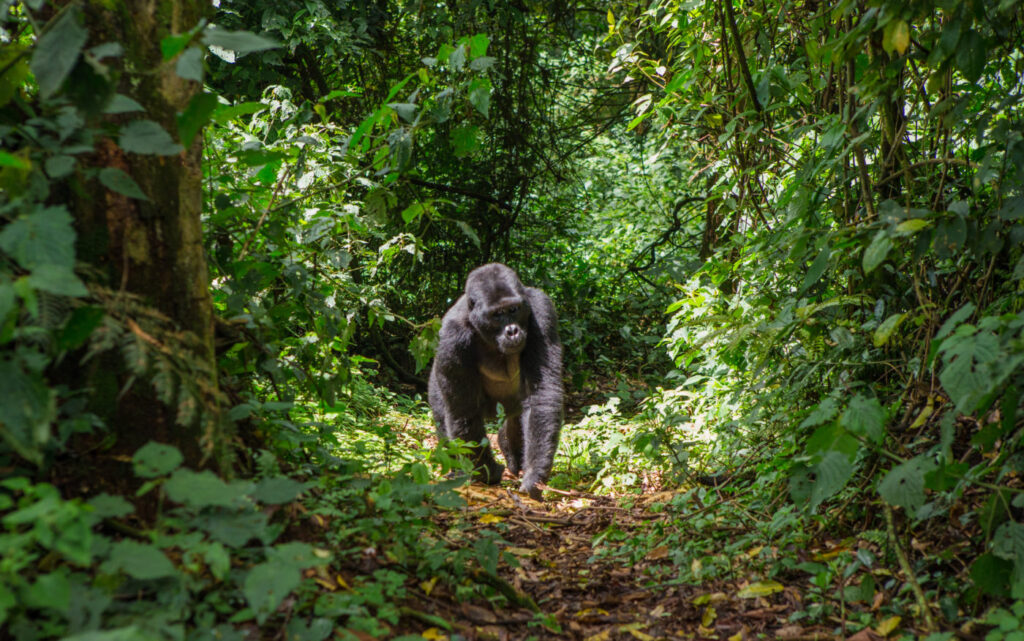
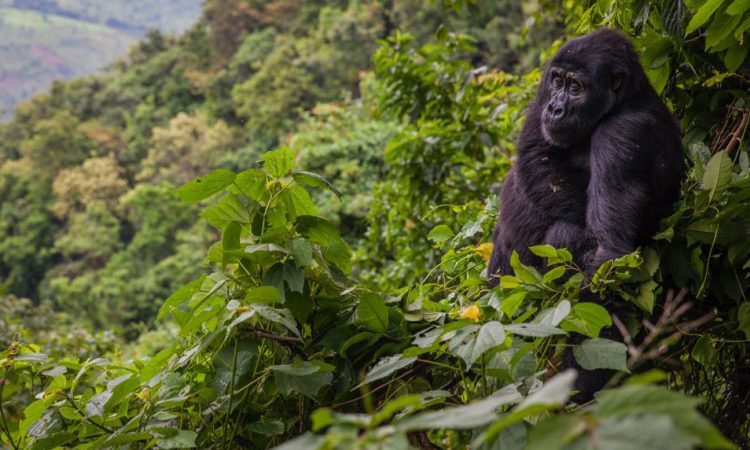
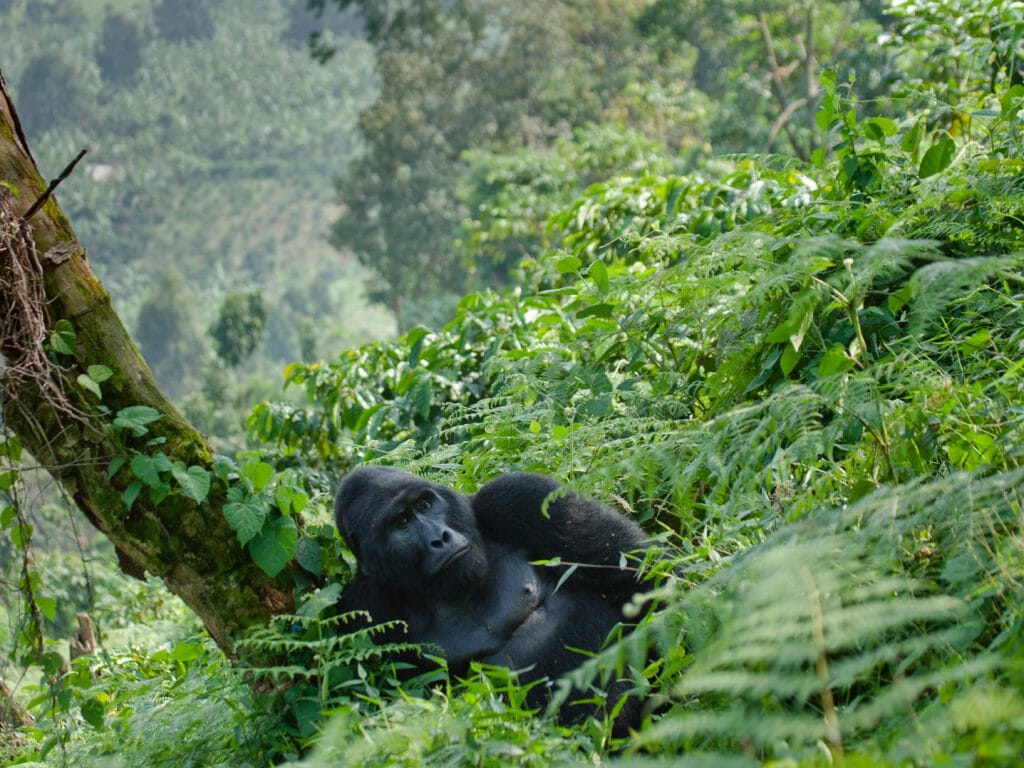
Mountain Gorilla experience is one of the most thrilling experiences one can have in a lifetime it is the most sought-after thing to do by many travelers seeing mountain gorillas is like a dream come true! They live withinthe Central African montane forests and have been listed by the IUCN red List as critically endangered, they are a subspecies of the eastern gorilla Beringei which survive in high altitudinal zones only ranging from 2,200-4,300m above sea level, the gorillas are the largest living primates with muscular arms, massive chests, bodies covered in fur with brown eyes, they are characterized by their gentle behavior,intelligence and are herbivorous in nature feeding on the forest plants, tree backs, mushrooms and occasionally insects like termites.

InUganda mountain gorillas are found in only 2biodiverse ecosystems, Bwindi Impenetrable NationalParkin the southwestern part ofthe country home to half the population of the gorilla species in the world, the conservation area was gazette as a national park in 1991, and later recognized as a UNESCO world heritage site by 1994 this was done as a way to protect the endangered species of the park, divided into 4 sectors(Nkuringo, Buhoma,Ruhija, Rushaga) each of these has gorilla families habituated forguest visit, the first place to have gorilla trekking experience was the Buhoma sector of the park, Mgahinga national park is home to only one transboundary gorilla group called  Nyakagezi gorilla family recently there was a group joining and have been static for some timebut it doesn’t guarantee that they will not move, they absolutely move from one point to another other ecosystems to see the mountain gorilla include Volcanoes national park of Rwanda and Virunga national park in the democratic republic of Congo.

Gorilla trekking experience is done daily beginning in the morning at approximately 8:00 am Uganda Wildlife Authority teamdoes a briefing basically about the forest and gorillas, Tracking is done in groups of 8 per gorilla family it takes 2 -8 hours or even the entire daydepending on how far families have moved. Permits can be accessed through your ground handler foreign residents the rate is $700, for foreign residents, $600, and for East African citizens 250,000 shillings. It is important to pack right for this safari mainly warm clothes, long-sleeved shirts and trousers, waterproof hiking boots, gaiters, insect repellants, and any other items of personal nature.

The experience can be combined together with the Batwa cultural experience these are groups of the last structured short people in Uganda, they lived in the forest amicably with other creatures however due to conservation purposes these were evicted and hence continued living around the national park performing to their cultural songs,demonstrating how they lived in the forests and other medicinal purposes. Birding at both destinations is a rewarding experience Some of the birds of the region are endemic for example the African green broadbill to the Ruhija sector. The conservation areas can be accessed by road taking approximately +/-9 hours’ drive through western Uganda or +/-6 hours drive through RwandaCharter or scheduled flights can be arranged to the Kisoro or Kihihi airstrip.